Last month, we led an all-day seminar for the 88 colleges and universities in Ohio on how to create powerful campaigns for sexual assault awareness and prevention. While institutions continue to improve and broaden their resources for awareness, prevention, and support of victims, their approaches to communicating these messages don’t always get strong attention or funding.
There are a handful of national campaigns (such as It’s On Us) that schools can tap into. Many campuses also work with student groups or other internal resources to create their own communications. Either way, many of the elements that consumer brands use to create compelling pieces can also be applied to these campus initiatives.
Know your audience.
What we know through our research on Generation Z, is that it’s important to connect to them through their mindset (vs demographic) because it’s bound to create a tighter emotional connection to a message. There’s plenty of research on the subject of what makes Gen Z tick: equality causes, global view, open perspectives, embracing diversity, having experiences (as opposed to things), deep value systems, environmental concerns, and blended family models, to name a few. They are passionate about helping to change what’s wrong with the world, so when trying to bring awareness about a cause to this group, we should already have a leg up.
Learn from the pros.
When you think about some of today’s strongest consumer brands — BMW, Google, Apple, GE, Nike, Target, Coca-Cola, Under Armour — their campaigns have certain characteristics in common:
- Human
- Personal
- Relevant
- Inclusive
- Evolving
- Honest
- High-aesthetic
- Multichannel
- Fearless (not afraid to take risks)
- On brand (always, down to the tiniest detail)
So how do these campaigns bring these characteristics to life?
By being real, backing their claims up with facts, owning up to their mistakes, and admitting when they don’t have the answers. They offer opportunities for engagement: not just pushing messages out, but creating space for meaningful conversation. And they tend to speak with a voice that sounds conversational, not glib or cloying or manufactured.
These brands are also reinterpreting traditional media placements and using space (something campuses have plenty of) in interesting ways. The point is to show and not tell — because sometimes, fewer words can foster a stronger connection.
While campus campaigns around social and student issues require incredible sensitivity, support resources, and awareness programming, the traits listed above can be applied to create powerful campaigns despite smaller budgets and resource constraints often faced by student affairs offices.
Define your tone and your message.
Find the tone that is appropriate for the subject matter, but also sure to cut through the clutter to reach the target audience. Remember, tone of voice is not what you say, but how you say it. This encompasses not only the words you choose, but their order, rhythm, and pace. Tone also builds trust, which is critical to gain among today’s college student.
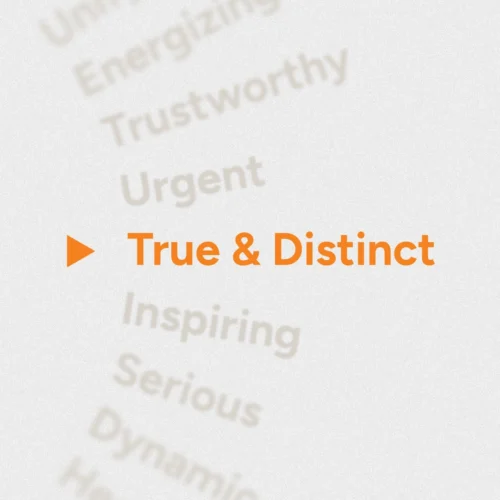
In thinking about tone, one invaluable exercise is to choose a word or two (or more) that encapsulate how you want your campaign to sound. Here are just a few from our workshop, for starters:
Soft
Simple
Safe
Powerful
Raw
Inspiring
Bold
Direct
Arresting
Edy
Supportive
Reassuring
Next, identify the purpose of the communication pieces within the campaign, to help focus your message. Is the goal of the campaign encouraging conversation? Creating awareness? Changing behavior? Building a support system? Of course, all of these are important goals, but one has to rise to the top.
Remember, campaigns are about people and connecting with them. Start with a clear goal, then you can decide on the ways your campaign will connect. Need help getting started? This tactic map will help you begin thinking about how a campus campaign could come to life. Tactic plans are like journey maps: non-linear and evolving so it provides a level of flexibility and variety depending on the goals.
The complexities and sensitivities around issue-based awareness campaigns on campuses are many, but that doesn’t mean the best practices from some of today’s top brands and their approaches to campaigns can’t be applied.