Leading through influence takes truth and the nerve to hear it about yourself. Stepping into the CEO seat has forced me to think about influence more than any title ever did.
The higher the seat, the less authority carries you, and the more you have to lean on what you built when no one was watching.
The difference between authority and influence.
My first lesson in influence came by way of a mentor early in my career: Volume is not presence. Raising my voice devalues what I am trying to say because volume signals the idea cannot stand on its own. In that moment, I saw that the most influential person in a room is rarely the loudest one. They are the one everyone glances at before decisions are made. Oftentimes, quiet reads as certainty, and certainty is what people follow. If the loudest voice owns the moment, the calmest presence owns the outcome.
Influence is the residue of every interaction you have already had. Have you ever heard your own idea retold in a meeting, with no credit to you? An influential leader does not read that as a slight. They read it as proof that the thinking took hold and moved without them.
We often confuse two words: authority and influence. Authority is title, seat and budget. It needs you in the room; it is more often borrowed than earned; it ensures compliance; and it ends at the door. Influence works across entire organizations. It enters rooms without you; it is rented, with rent due daily; it encourages collaboration; and it compounds. Both are part of leadership, but do not spend a career collecting authority and then wonder why nothing you built outlasts you.
You will not be there for most of the choices your influence shapes, so you work on the person, not the decision. Change how one person thinks, and you change every call they make after you, in rooms you will never sit in. This is slow work, and you rarely get to watch it happen. Influence is quiet and delayed by design.
So, how do you build it?
Growing your influence as a leader.
I believe influence is built through habits, not through a personality you are born with. Six areas of focus have helped me build it, keep it and grow it.
Be useful. Doing things for people benefits you. Collaborate with the same enthusiasm regardless of the problem. Helping builds trust, and trust builds influence.
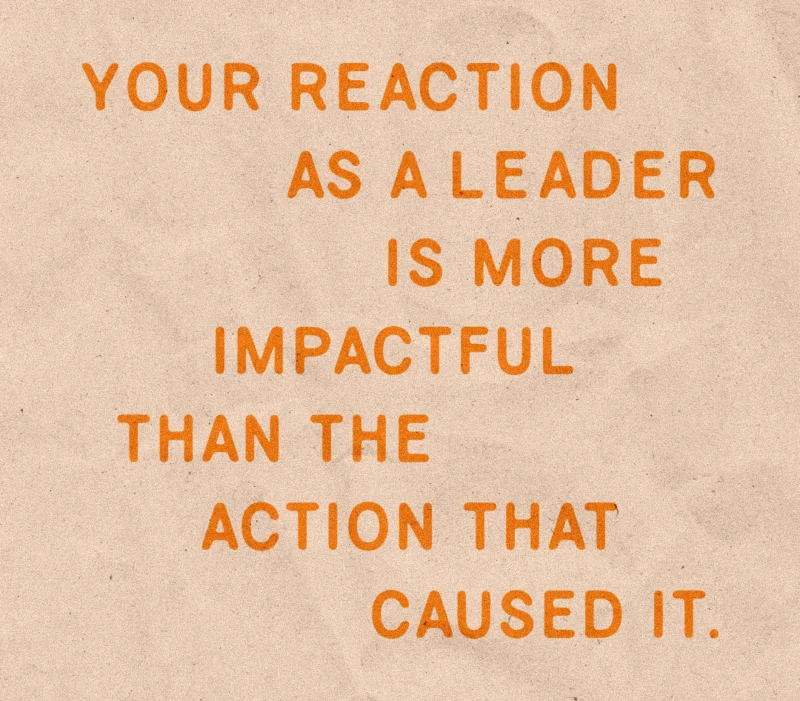
Be consistent. Your reaction as a leader is more impactful than the action that caused it. Become emotionally predictable under pressure.
Develop people. Measure success by the growth of the people around you. Give away credit, and help nurture people who want to do something with their skills.
Be a connector of people and of things. Influence is worth the most when it’s in motion. Do not gatekeep. Be the shortest path between a problem and a solution.
Ask for feedback out loud. It might hurt, but it will not harm you. Say the hard thing about yourself first, and watch it free those around you to be honest.
Prepare. Most influence lives in the gap between preparation and winging it. Do the reading, ask the questions, rehearse the slides. Show people you give a damn.
Why ambition needs to point to something larger.
Influence is often rooted in ambition, and ambition has a bad name. Ambition is not the problem. The problem starts when the win stops at you. If only you win, your influence as a leader has a short shelf life, and you likely do too. People will help you climb once. They will not do it twice for someone who pulls the ladder up behind them. Who benefits when you win?
I’ve learned that scarcity is what corrupts ambition. The belief that there is only enough for one turns an influential person into someone who hoards, hides and takes credit. Abundance protects it because when you believe there is enough to go around, you can afford to be generous and still win. There is no award for being the last one standing in a room no one wants to be in. Aim ambition at something bigger than your own name, such as a number, team, standard or mission. Ambition pointed only at yourself has a ceiling. Ambition pointed at something larger does not.
The takeaway.
Building influence is hard work. Protecting it from corruption is harder. The six habits create influence. Protecting it lives a little deeper within us, and I think it comes down to confidence, humility and preparedness.
• Confidence is knowing you can handle whatever the room brings, which is exactly why you no longer need to control it.
• Humility is not thinking less of yourself. It is being secure enough to be genuinely curious about how you are wrong.
• Preparedness is a form of respect. It tells people their time matters and that you refuse to make them carry your uncertainty.
As you approach your next leadership decision, ask yourself: What do people do because of you when you are not in the room?
*This article was originally published on Forbes for the Forbes Business Council.*