“There has never been a better time to invest in organic social media.” — Rachel Karten, creator of Link in Bio, speaking at the 2026 Cannes Lions International Festival of Creativity.
The one thing everyone who works in social media can agree on is whatever is coming out of Rachel Karten’s brain, and for good reason. If you’ve been waiting for the sign that your brand is ready to level up and become the next Yeti, this is it. You have the ideas, the enthusiasm, and the Rachel Karten seal of approval. Original content is the fun stuff, and the possibilities are endless once you figure out where to start. That start is what we in the biz call “strategy.”
For brands on a mission, especially those in higher education, original content is the great equalizer. Public libraries, PBS, and humble municipal offices are creating some of the most loved and watched content on social media, simply by serving audiences with low-budget entertainment and inspiration in ways only they can.
Before you start, there are a few things you should know. You’re allowed to have fun at work. As Kendall Hope Tucker has pointed out, you can’t compete with a brand that’s having fun. There are plenty of other sound business reasons, too, especially as consumers are increasingly desperate to connect with a human element amid the AI slop.
But.
There are a few other things you need to know, and you need to know them deep in your bones. These are things the most fun, creative people on your team — your social media managers — are too polite to tell you, even though this new venture will almost certainly affect them more than anyone else at your brand.
I love social media managers, and I will happily deliver the cold, hard truth in their place. Your social media manager is already executing a well-informed original content strategy, whether you know it or not. So for organic content, you need a thoughtful, researched, brand-wide, capital-C, capital-S Content Strategy. Not because they don’t know what to do, but because you owe them the direction, support, realistic expectations, and brand-wide buy-in they need to do what their beautiful, internet-rotted brains do best: come alive online.
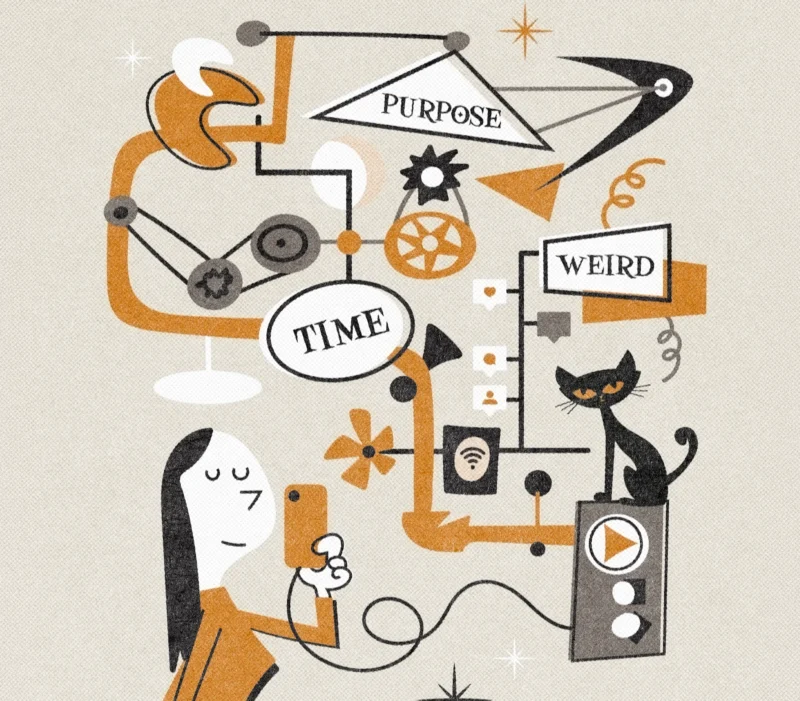
Content takes time.
A good social media manager is a one-person, full-service creative agency and video production team. They balance uninformed and conflicting directives and act with lightning speed on fickle platforms, serving their hard work (and often their actual faces and identities) to unforgiving audiences, only to be referred to as “the intern” in the comments. Know that content creation can be a full-time job, though it’s likely just one fraction of your SMM’s many responsibilities. For many of the brands you aspire to emulate, like Alexis Bittar or Duolingo, content creation often involves several full-time jobs on robust production teams, or it’s outsourced to filmmakers with a great deal of creative autonomy.
Great original content is deceptively easy to consume, and surprisingly labor intensive to create, curate, and publish strategically. Even content that’s made to feel native to social — as in, shot on a phone and edited in an app (that was an informed, strategic decision btw) — takes care, personal investment, and, like all things that appear effortless, a buttload of effort.
It also takes time to catch on. There will be pushback from audiences new and old. There will be mixed signals. And, without a solid strategy in place, there will be temptation to dramatically change course instead of iterating on good ideas.
Content has a purpose.
The difference between organic content and campaign content isn’t the presence of a mini mic. It’s function. Campaigns serve a brand by telling their story with strategic messaging and placement. Organic content serves the audience by giving them something of value in exchange for their attention. For higher ed institutions, this means creating an online extension of the IRL experience: It means turning social feeds into a place for education, support, and belonging. Organic content grows an audience through entertainment, then transforms that audience into a community of brand loyalists by consistently serving them what they need and want.
Content is for someone specific, and it does something specific, like entertain or educate. Unless you are Beyoncé, your audience is not the general public, and the purpose of your post cannot simply be that it exists. Only certain people are aware of you, and even fewer actually care what you have to say, and that’s a good thing. Know who you’re making content for and know what you can uniquely offer them.
This means your social media team needs the authority to reject posts. Your social and content platforms are not bulletin boards for companywide general use, and you can’t execute a good content strategy when everyone feels entitled to the airspace.
While requiring audience-specific, purposeful content is a good boundary to enforce among the departments abusing your social feeds, your social team should feel empowered to take a more intuitive approach. To paraphrase a post I saw on LinkedIn (I would credit it if I could find it!): “It was cool and people liked it” is a perfectly good content goal for a smart social team. I would argue it should be your only organic content goal, but I’m annoying.
Content is weird.
The good stuff, anyway. I said the possibilities are endless, and that’s true, but the best content strategy is the one only your brand can pull off. To do something truly original, you have to be ready to take risks. So much interest in original content is driven by the urge to be the next Insert Brand Here, but The Brand You Mentally Inserted Here didn’t earn that distinction by following any strategy but its own. No one wants to be first, but everyone wants to be second.
The bottom line.
There are a million niche audiences out there waiting to be discovered and served, ready to build community around your brand. There are prospective students who can’t picture themselves at any school marketed to them so far. There are nostalgic alumni ready to reconnect with a forgotten feeling. There are donors who want an intimate look at their support in action. You are sitting on a motherlode of fascinating stories and quirky on-screen talent. Are you ready to find your weird and share it with the world?