In the age of AI search, students are forming opinions about colleges and universities before they ever click a link, as more searches end in “zero-click” behavior on Google’s results page. That shifts where trust is built and what role marketing plays in earning that trust. If your institution doesn’t adapt, your story will be shaped without your input. Ads alone can’t do the heavy lifting anymore, but they’re far from irrelevant. The institutions that get ahead will be the ones that pair clear, credible information with media placed at the right time, in the right way.
What’s changed?
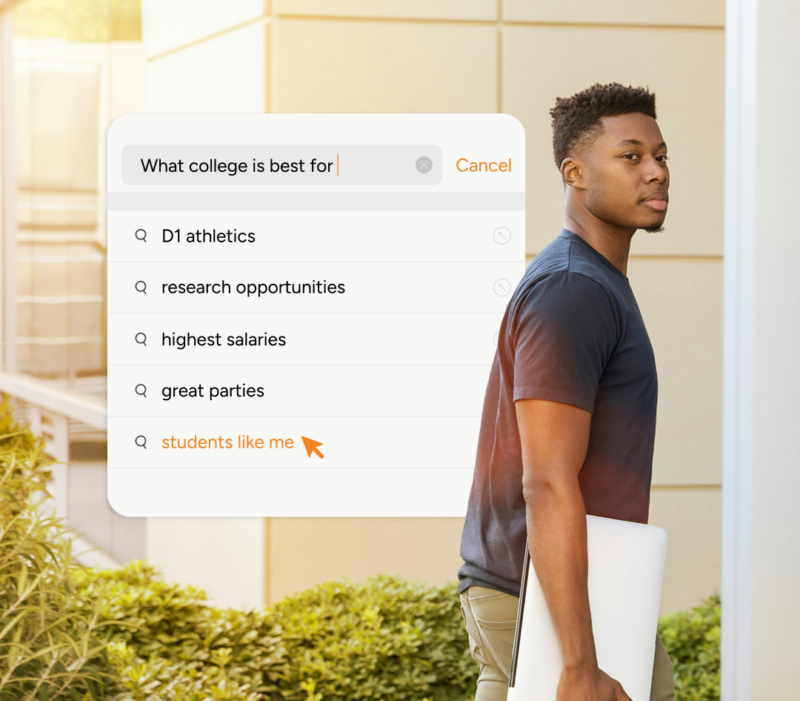
Prospective students are already treating AI overviews as their starting point for information. They’re asking search assistants and ChatGPT to explain programs, compare institutions, and formulate pros and cons before they ever visit a college website, a behavior that’s now common enough to show up in national surveys of high school students. Clicking through is no longer the default behavior; it’s something that happens only once an answer feels credible enough to pursue further (mirroring broader “zero-click” trends in search behavior).
This shift has also changed how ads are perceived. As AI platforms begin testing paid placements, the distinctions between sponsored, crowdsourced, and generative information are more apparent to regular users. While AI founders have insisted these ads won’t influence the responses their models generate, their presence reinforces a growing skepticism toward paid content.
What does this mean for institutions?
When the answers about your institution are incomplete or inconsistent, that gap doesn’t stay empty — AI fills it. And whatever fills that space quickly becomes the narrative. Owning your story is harder now, because no single channel controls it. Your institution’s website is still the main source of truth, but it’s no longer the only place students encounter your story.
AI pulls from your official website, but also Wikipedia, Reddit, rankings, reviews, and more, as documented in recent audits of how generative AI systems source their answers. When these sources tell different versions of your story, AI simply repeats the inconsistencies. What students then see isn’t what you intended to say, but whatever happens to surface first.
What does this mean for your marketing strategy?
As your users’ trust shifts, media has to work differently. Your ads must lead with proof, deliver clarity without requiring a click, and reiterate (or correct) what AI summaries and other channels say. At first, it might seem like this shift makes paid media less important. If students are forming opinions through AI, why advertise at all?
The answer is that paid media still plays a critical role, just in a different way. Media is where decisions turn into action. If students have already researched your institution, that’s when strong, opportune paid placements can reinforce what they’ve learned, giving them a clear next step. Media becomes the bridge between understanding and acceptance: showing up at the right moment, for the right audience, with confidence that moves them forward.
How to respond and where to start.
When AI informs first, and ads are considered second, the brands that win will be the ones that offer consistent information — everywhere answers are found.
Our point of view is simple: Paid ads work hardest when they echo, clarify, and validate what students have already learned elsewhere, and provide them with a straightforward path to action.
Ologie doesn’t simply “optimize for AI.” We design our media strategies and creative assets so that paid ads and AI reinforce each other, instead of working in isolation. This means planning our media buys to mirror how students traditionally move through the funnel.
Top-of-funnel: Building awareness.
We start with creative that gets your institution on the radar. Work that’s human, distinctive, and memorable enough to spark interest, without trying to explain everything at once.
Mid-funnel: Influencing consideration.
We write and help maintain accurate information that shapes what students find when they search through AI. This includes specific program pages, concise summaries, and consistent proof points across owned and third-party sources. Targeted mid-funnel ads should consider what AI is surfacing about your brand to build trust and credibility.
Bottom of funnel: Driving action.
When your paid media matches the information delivered through AI, it turns recognition into action. Ads that refer to what students already know strengthen messaging and make the next step feel obvious.
Rather than working with AI and paid media as separate efforts and entities, we treat them as a single ecosystem. This way, the messages that prospects discover, absorb, and ultimately engage with all sing from the same songbook.
The bottom line.
With AI reshaping how students learn about institutions, credibility is currency. The institutions that earn it won’t be the ones shouting the loudest, but the ones whose story holds up wherever it’s encountered.
That’s the work Ologie is built for: helping your brand stay clear, credible, and in control of your story.
A closer look: Audit your AI narrative.
- Ask ChatGPT or Claude to summarize your institution. What proof points show up? This mirrors how many prospective students now use AI tools in their college search.
- Compare your program pages. Are they consistent in their claims and data?
- Check Wikipedia, Reddit, and review platforms for conflicting language about you and your offerings.
- Review your paid creative. Does it reinforce or contradict AI summaries?
FAQ: AI, zero-click search, and higher ed marketing.
What is zero-click search in higher education marketing?
Zero-click search happens when students get the information they need directly from AI overviews or search summaries without clicking through to an institution’s website. Increasingly, students are forming opinions about programs and brands before they visit a site.
How does AI shape an institution’s reputation?
AI tools pull from websites, reviews, rankings, Wikipedia, forums, and other public sources. If these sources are inconsistent or incomplete, AI may deliver information that’s fragmented or unclear. Over time, these summaries can influence perception.
Are paid ads still effective in an AI-driven search environment?
Absolutely, but their role has evolved, with recent case studies showing that AI often shapes awareness while paid media drives the final action. In some cases, paid media reinforces what students have already learned through AI or search. In others, it provides needed clarity or context when those summaries are incomplete, outdated, or skewed by third-party sources.
How can institutions improve how they appear in AI-generated answers?
Institutions should ensure that their program pages are clear and specific, align their messaging across owned and third-party platforms, and maintain consistent proof points such as outcomes data and differentiators. Clarity and consistency increase the likelihood that AI results will reflect the intended narrative, a finding echoed in SEO and AI-search research that favors concise, structured content.
Should institutions optimize directly for AI platforms like ChatGPT?
Rather than optimizing for a specific AI tool, institutions should focus on strengthening their overall information ecosystem. When websites, third-party profiles, and messaging are aligned, AI systems are more likely to reflect an accurate and credible story.